
A sudden expense on a modest but steady salary raises a fair question: is a ₹15,000 loan a smart way to bridge the gap, or is it better handled another way? In many cases, borrowing is the sensible choice.
A short-term loan can be a genuinely useful tool when the expense is worth it, and you can repay it comfortably from what you already earn. What matters is matching the loan to the right situation, and the sections ahead show you how to judge that clearly, so the decision feels easy and confident before you commit.
Table of Contents

What counts as a 'good reason' to borrow ₹15,000 on a modest salary
Whether ₹15,000 personal loan is worth borrowing comes down to the expense itself. A good reason passes three checks: the cost is one-time, it is necessary, and borrowing for it costs less than skipping it or breaking your savings. A few familiar expenses fit cleanly:
- An annual insurance premium for health, life, or your vehicle, due once a year
- An urgent home or vehicle repair that is important and cannot wait
- A medical or hospital bill that is not fully covered and cannot be delayed
- A school, college, or exam fee with a fixed deadline you must meet
- A rental deposit when you move for a job, paid once at the start
- A broken essential appliance, such as a fridge or stove, that you have to replace
An instant personal loan for unexpected expenses suits these one-time, necessary costs, not routine monthly spending.
One-time and time-bound vs recurring and structural
Before borrowing, place your expense on the right side, because this one distinction decides whether a loan is the correct tool to use:
When the same shortfall appears every month, like rent or bills that outrun your salary, the problem is structural, and borrowing makes it heavier rather than lighter.
When ₹15,000 borrowed beats ₹15,000 withdrawn from savings
You might hold the ₹15,000 in savings, yet borrowing can still win, and the reason is the opportunity cost of liquidating savings.
Breaking your savings early costs you on two fronts:-
- An FD penalty of roughly 0.5% to 1% at banks like SBI and HDFC
- Lost compounding from a stopped SIP or investments sold early
If a short loan costs less than those two combined, keeping your savings invested leaves you better off.
When taking a ₹15,000 loan on a small salary is the wrong move
Recognising when not to borrow protects you more than any approval. On a small salary, a ₹15,000 loan is the wrong move in three clear situations, and each one is a red flag worth catching before you apply. Do not borrow when any of these is true:
- A recurring shortfall: Money runs out every month, which points to an income or expense problem that credit only deepens.
- No clear way to repay: Without a plan to clear the loan within the cycle, the borrowing turns into a heavier burden fast.
- Borrowing to repay another debt: Taking new credit to cover old debt stacks one obligation on another and rarely ends well.
If any of these describe your situation, pause and fix the underlying cause first, because borrowing now would only deepen the problem rather than solve it.
Borrowing to cover a recurring gap
A loan can bridge a gap that happens once, but it cannot repair a budget that does not balance. When the shortfall returns each month, treating it with credit only carries the problem into the next cycle and adds to it.
The real fix lives in two places: raising your income, or trimming the fixed expenses that leave you short. Solve the cause, and the monthly gap closes on its own.
Borrowing without a clear repayment line
Before borrowing, answer one question honestly: Where will the money to repay this loan come from?
If you can name it, a steady surplus from your salary across the cycle, you have a plan. If you cannot, you do not, and the loan should wait. A repayment line you cannot point to is the clearest sign to hold off, with no exception worth making.
How to check if a ₹15,000 loan fits your salary
You do not need a calculator to check whether a ₹15,000 loan fits your salary. One simple formula tells you whether the repayment sits inside what you already keep each month.
The affordability formula
- Find your monthly surplus: take your take-home pay and subtract your fixed monthly expenses. What is left is the money free to repay a loan.
- Check the cushion: that surplus, across the repayment cycle, should add up to comfortably more than ₹15,000.
Even a ₹7,000 surplus each month clears ₹15,000 within the cycle without strain. If your surplus is thin or uncertain, the loan does not fit yet.
With a ₹7,000 monthly surplus, the borrower can set aside funds throughout the repayment cycle and build enough savings to comfortably repay a ₹15,000 loan when it becomes due. If your surplus is thin or uncertain, the loan may not fit your budget yet.
What to do if the number is tight
If the surplus is thin, you have two honest options, and neither is a failure. Borrow less than ₹15,000, so the repayment fits what you can spare, or wait and save toward part of the cost before borrowing the rest. Stretching to borrow the full amount when the math is tight is the one move to avoid.
What a regulated short-term ₹15,000 loan actually involves
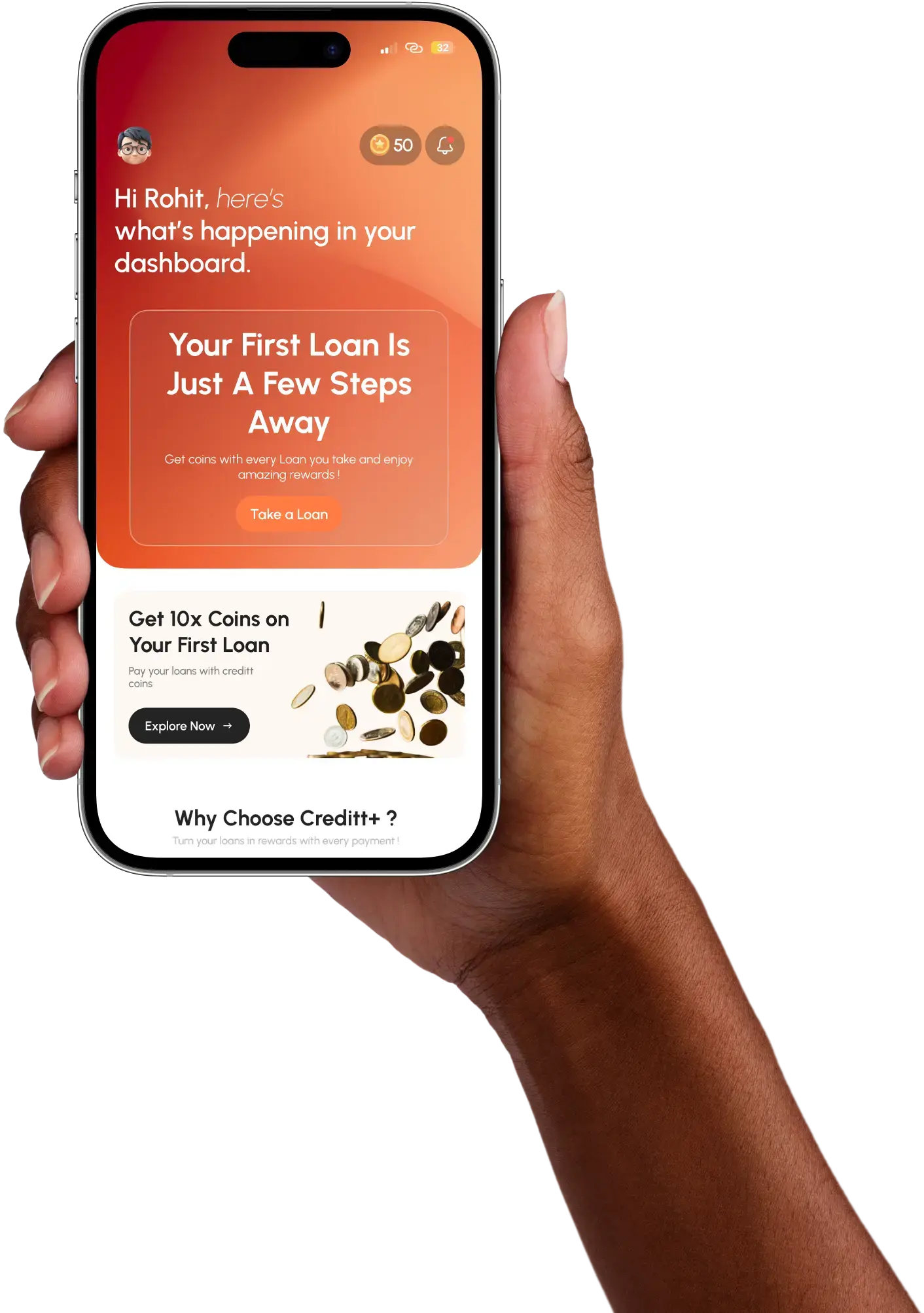
Once your expense clears the three-part test and your monthly surplus comfortably covers ₹15,000, borrowing is a sound move. At that stage, a regulated lender like Creditt+ keeps the loan simple. Here is how it works, from the amount to disbursal:
The loan is available to salaried professionals, including first time borrowers who may not yet have a credit history. Eligibility is assessed based on the applicant’s overall profile rather than credit history alone. Lending is provided in partnership with Sampati Securities Ltd, an RBI registered NBFC (Registration No. 01.00214), and all approvals are subject to the lender’s assessment.
Eligibility on a modest salary
A common worry on a modest salary is whether you qualify at all. The bar is lower than you might expect, resting on three things:
- Income: a salaried income of ₹20,000 a month or more, credited to an active bank account
- Credit score: 680 or above, where applicable
- First-time borrowers: considered even without a prior credit history, assessed on your profile
A ₹15,000 loan sits well within a single-cycle repayment for most salaried profiles at this income level.
No penalty for repaying it early
There is no penalty for repaying early, which matters most on a tight budget. If a good month lets you clear the loan ahead of its end date, you can shorten the commitment and free your salary sooner. The option to exit early lowers the risk of borrowing in the first place.