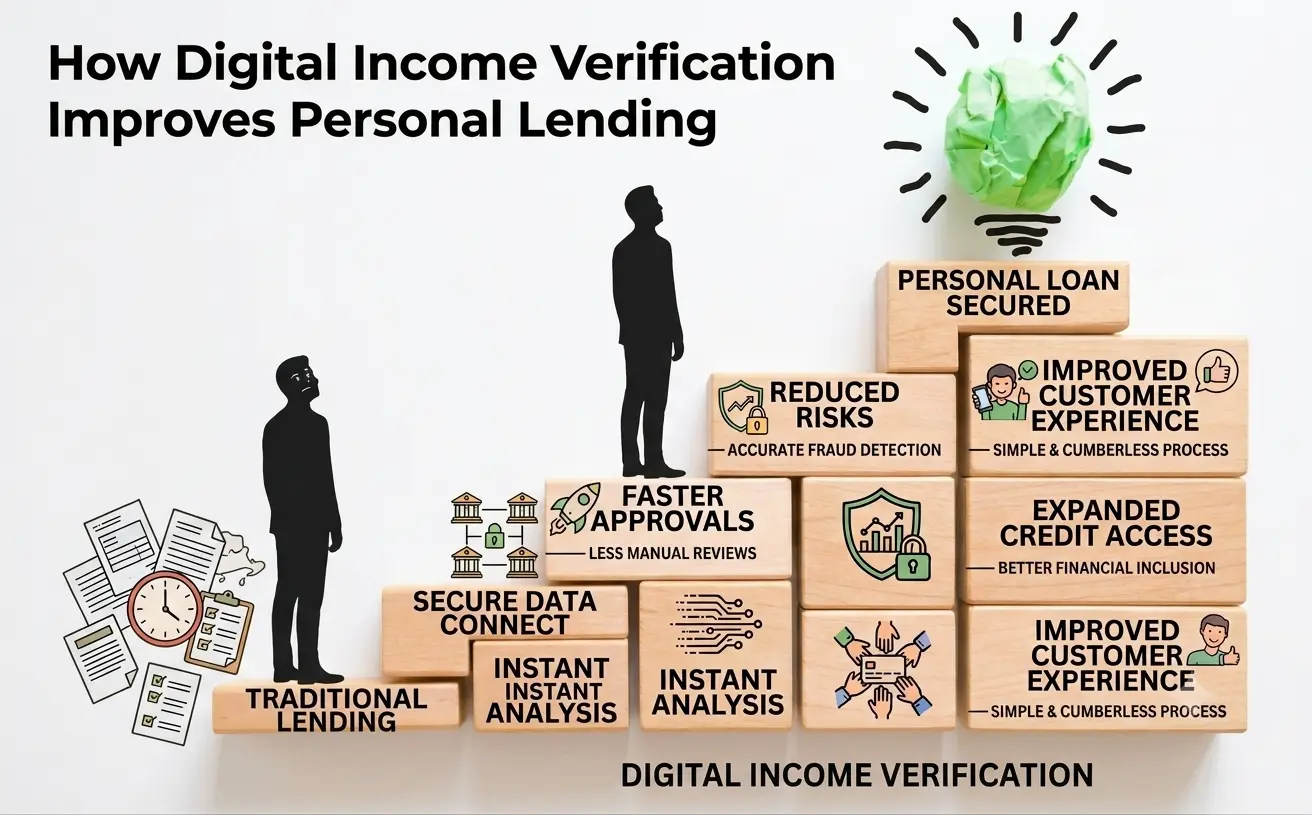

Applying for a personal loan no longer has to involve collecting salary slips, printing bank statements, or waiting days for document verification. Digital income verification replaces much of this manual process with consent based retrieval of verified financial information.
For eligible applicants, lenders can review income details more quickly, reducing processing time from days to minutes in many cases. Faster verification also helps lenders make more informed lending decisions by assessing income patterns instead of relying only on uploaded documents.
Table of Contents

What Is Digital Income Verification in Simple Plain Terms
How Does Digital Income Verification Speed Up Loan Approvals
How Does Verified Income Data Lead to Better Lending Decisions
What Does This Mean for a Creditt+ Applicant Specifically
Does Digital Verification Actually Lower Borrowing Costs for Applicants
FAQ
What Is Digital Income Verification in Simple Plain Terms
Digital income verification allows lenders to verify an applicant's income directly from authorised financial sources after receiving their consent. Instead of manually uploading salary slips or bank statements, verified information is shared electronically, making the verification process quicker and more efficient.
Versus Manual Payslip Uploads
Traditional loan applications often require applicants to upload salary slips, bank statements, and other income documents. These files may be outdated, incomplete, or require additional manual checks before a lending decision can be made.
With digital verification, income data is retrieved directly from verified financial sources after the applicant provides consent. This reduces manual document handling and helps lenders review more reliable information.
Some verification systems can retrieve income history covering up to 24 months, giving lenders a broader understanding of an applicant's earnings than a single monthly payslip.
How Does Digital Income Verification Speed Up Loan Approvals
The biggest advantage of digital verification is reducing the time spent collecting and reviewing documents. Since verified information is retrieved electronically after consent, lenders can begin assessing applications much sooner.
India's Account Aggregator Framework
India's digital lending ecosystem uses the Account Aggregator framework, an RBI backed system that allows borrowers to securely share financial information between regulated institutions after providing explicit consent.
Instead of emailing bank statements or uploading scanned documents, eligible applicants can authorise their financial information to be shared digitally. This improves efficiency while giving borrowers greater control over what information is shared.
A typical process looks like this:
- The borrower submits an instant personal loan application.
- The lender requests permission to access financial information.
- The borrower provides explicit consent.
- Verified financial data is shared through the Account Aggregator network.
- The lender reviews eligibility using the retrieved information.
Because verification happens electronically, many applications that previously required several days of document collection and review can now move forward much faster. If you're applying for your first loan, understanding personal loan eligibility alongside digital verification helps explain how lenders assess applications beyond uploaded documents.
Did You Know? Consent based digital verification can reduce document collection and review from several days to just minutes for eligible applicants, making loan processing significantly more efficient.
How Does Verified Income Data Lead to Better Lending Decisions
Verified income information provides lenders with a broader picture of an applicant's repayment capacity. Looking beyond a single salary figure helps create fairer lending decisions, particularly for borrowers with varied income patterns.
Helps Thin File, Variable Income Applicants
Not every applicant has a conventional salary profile. Freelancers, gig workers, consultants, and self employed professionals may receive payments at different times, making a single bank statement or salary slip less representative of their actual earnings.
Pattern based verification allows lenders to review recurring deposits and income trends instead of depending on one document alone. This creates a more complete picture for applicants with variable incomes. For example, someone applying for a 25000 personal loan may demonstrate repayment capacity through consistent cash flow rather than a fixed monthly salary.
What Does This Mean for a Creditt+ Applicant Specifically
Digital income verification makes the application process simpler for eligible borrowers, but it doesn't replace the lender's responsibility to assess creditworthiness. Faster verification improves efficiency without changing the lending standards.
Speed Isn't Guaranteed Approval
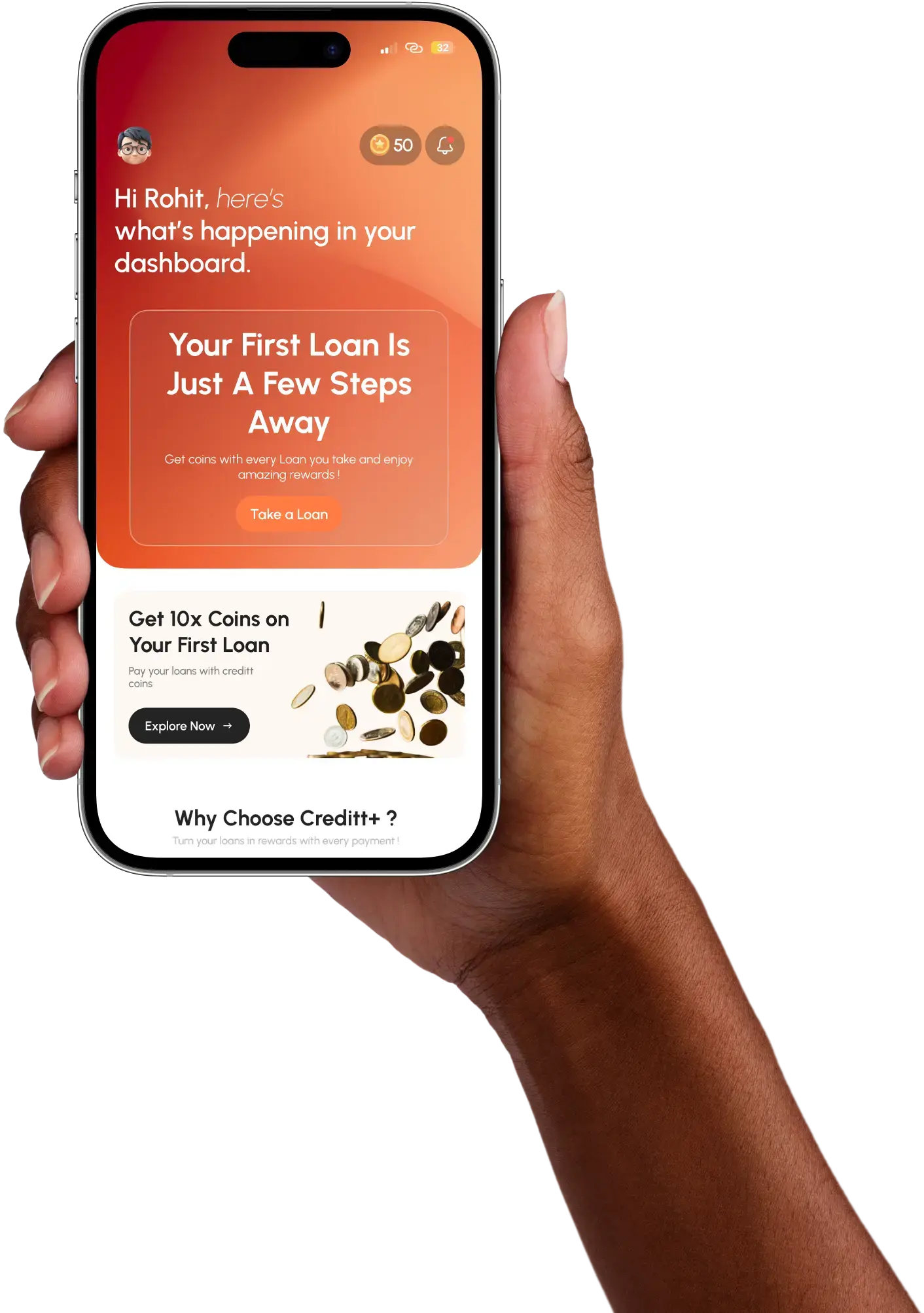
Creditt+ web and app supports digital applications by enabling eligible applicants to complete e-KYC and share bank information digitally where applicable. The assessment considers income and banking behaviour rather than relying only on manually uploaded documents.
However, faster verification should not be confused with guaranteed approval. Every application is still assessed against the lender's eligibility criteria, repayment capacity, credit profile, and other applicable requirements. Applicants earning a 40000 salary may benefit from quicker verification, but approval always depends on the overall assessment rather than income alone.
Financial Tip: Faster verification can reduce waiting time, but borrowing decisions should still be based on your repayment ability. Choose a loan amount that comfortably fits your monthly budget.
Does Digital Verification Actually Lower Borrowing Costs for Applicants
Digital verification reduces manual processing for lenders, helping make the application journey smoother and more efficient. However, it doesn't automatically reduce interest rates or make loans cheaper.
Borrowing costs continue to depend on factors such as your credit profile, verified income, repayment capacity, loan amount, and lender policies. Someone with a 60000 salary applying for a home renovation loan may receive different terms from another borrower with a similar income because every application is assessed individually.
For borrowers, the biggest benefit is convenience. Fewer manual documents, faster verification, and a simpler application experience make digital lending more accessible without changing the need for responsible borrowing.