
If you earn ₹30,000 a month, buying a phone you genuinely like can sometimes feel like a stretch. The models that catch your eye often cost far more than what feels comfortable to spend in one go, while the cheaper options can leave you wondering whether you'll be happy with them a year later.
The challenge is that a phone is not an expense you make every week. It's a purchase you'll likely live with for the next two to three years, which makes getting the decision right important. The ideal budget sits somewhere between what you can afford today and what the phone will be worth to you over its entire lifespan.
Table of Contents

What percentage of a ₹30,000 salary should go toward a phone?
phone is a once-in-two-or-three-years buy, so its price should stay near one month of take-home pay. On ₹30,000, that means ₹20,000 to ₹25,000, spread across the years you keep it, rather than pulled from a single month while rent waits.
The one-month-salary rule and why it works
Think of one month of salary as a guardrail, not a rule you cannot break. On ₹30,000, ₹30,000 is the hard ceiling, and ₹20,000 to ₹25,000 is the sensible band for most buyers.
Stay inside that band, and you get a phone that covers everything you need. Push past the ceiling, and you are spending money that the rest of your month cannot spare.
What that means for your monthly budget
A ₹24,000 phone sounds expensive until you spread it across the months you use it. Kept for 30 months, that phone costs ₹800 a month.
The sticker price is a one-time figure; the monthly cost is what your budget actually feels. Looking at purchases through a monthly affordability lens is one of the most useful financial tips for salaried employees, especially when deciding between immediate spending and longer-term financial goals.
When does it make sense to spend more than your budget allows?
Sometimes the right phone sits a little above your cash budget, and that gap is worth examining with honesty. The deciding question is what the phone does for you, not how it looks to other people.
Phone as a work tool versus a status purchase
Before you stretch the budget, be honest about which phone you are buying. One earns its cost every day, and the other only feels good at the counter.
Resale value and longevity
A ₹25,000 phone that stays useful for three years beats a ₹15,000 phone you swap out within eighteen months, both on cost per year and on resale value when you sell it on.
Build quality, battery health, and the number of years a phone receives software updates decide how long it stays worth carrying. Pay for the things that extend the life of the device, and skip the things that only lift the price tag.
Three Ways to Fund a Phone Above Your Cash Budget
When the phone you want costs more than the cash you have, three routes can close the gap, and the right one depends on how soon you need the phone and how quickly you can repay.
For many people, replacing a broken phone is one of those unexpected expenses that cannot always be postponed. This cost of borrowing comparison for salaried workers in India breaks the options down further.
- Save and wait: The cheapest route, since it costs only time. Best when the phone can wait without denting your income.
- No-cost EMI and pay-later: Feels lighter on the wallet, but late charges and a rolling balance can push the cost past the phone's own price.
- Short-term personal loan: One fixed amount, one repayment cycle, and a clear end date, with nothing left renewing after you repay.
Saving up vs buying now
Saving up is the cheaper choice when the phone is only an upgrade and your current one still does its job, because you can set aside a little each month and buy it with cash without paying anything extra.
The decision changes when your phone is the tool you earn from, since a delivery rider, a salesperson, or a freelancer with a dead phone loses orders, calls, and income for every day they wait to save. In that situation the money you lose by waiting can be larger than the cost of borrowing a small amount right now, so you should compare the income you give up against the cost of a short loan and choose whichever number turns out to be smaller.
No-cost EMI and BNPL
No-cost EMI and Buy Now, Pay Later (BNPL) plans make expensive phones feel more affordable by splitting the cost into smaller monthly payments. They can work well for people with stable income and disciplined repayment habits.
However, every EMI reduces future disposable income, and multiple plans can become difficult to track. Missing a payment may result in late fees, penalties, or credit score impact. Before choosing an instalment plan, make sure the repayment comfortably fits your budget without affecting essential expenses or savings.
When a short-term personal loan is the cleaner option
A short-term personal loan is the cleaner way to fund a phone when the gap is small, around ₹8,000 to ₹15,000, and you can repay it within a short cycle. Borrowing one fixed amount with a clear end date beats stretching the cost across a card balance that keeps renewing.
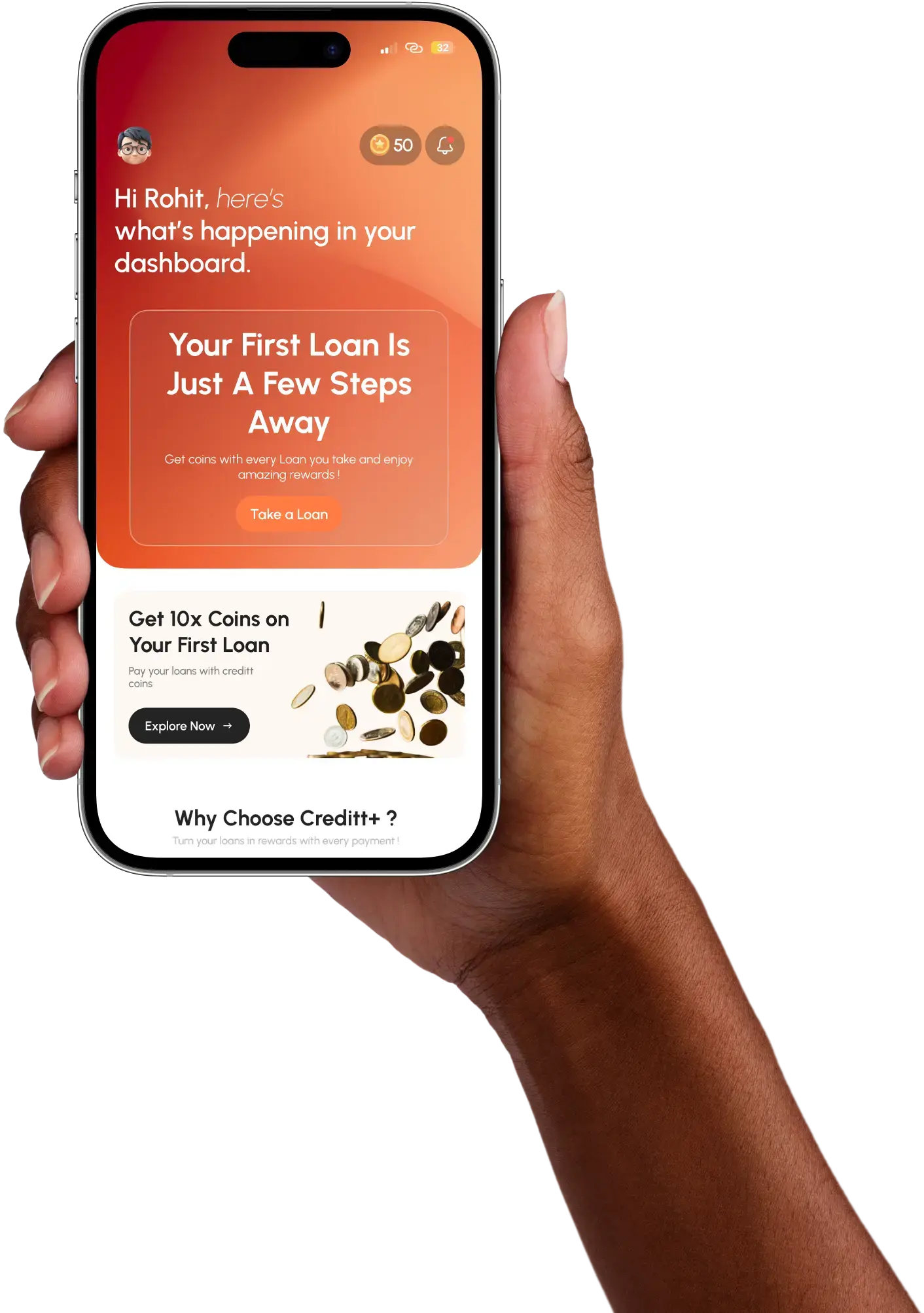
Creditt+ is designed for this kind of short-cycle borrowing for salaried professionals, and it provides personal loans for a mobile phone purchase within that range.
- Loan amount: ₹8,000 to ₹35,000, sized for a one-time gap.
- Eligibility: salaried professionals applying through the app and website.
- Verification: a quick digital KYC and selfie using your salary bank details.
- Disbursement: approved funds reach your bank account in a few minutes.
- Repayment: one fixed amount over a single cycle, with early repayment allowed.
- Regulated lending: in partnership with Sampati Securities Ltd, an NBFC registered with the RBI under number 01.00214.
How to check if you can repay a phone loan in time
Run one quick test before you borrow. Subtract your fixed monthly expenses from your take-home pay, and the surplus that remains should comfortably cover the loan across its repayment cycle.
If you earn ₹30,000 a month and spend ₹22,000 on essentials, you have ₹8,000 left. In that situation, a ₹10,000 phone-gap loan is usually affordable because the repayments can fit into your remaining monthly budget without affecting your other financial commitments.
Why a single repayment cycle beats a rolling balance for a one-time buy
When you're buying a phone as a one-time purchase, it's often easier when the repayment follows the same logic.
A single repayment cycle gives you a fixed amount to repay and a clear end date, there are no balances carrying forward or repayments continuing in the background, making the cost simpler to understand and plan for.