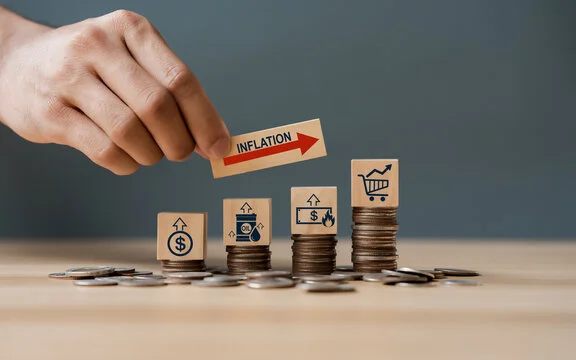

Headline inflation has cooled in India. From above 6% in 2022 and 2023, it has come down to roughly 3% to 3.5% in early 2026. The relief has not shown up in salaried life the same way, because nominal pay and personal costs do not move at the same speed. Read this blog to understand where inflation hits household budgets the hardest, how repo rate changes affect borrowing and four habits that protect what you earn.
Table of Contents

What inflation actually costs a salaried worker
A hike letter does not tell you how much extra spending power you actually got. It tells you the new rupee figure on your payslip. On a ₹30,000 salary, a 9% to 10% yearly hike adds about ₹2,850 a month. But rising prices on rent, groceries, petrol, and healthcare absorb roughly half of that before it reaches the wallet. What is left is your real hike.
How to read your own hike
You do not need any calculation. The honest answer comes from comparing two numbers, both already published. Your hike percentage sits at the top of your appraisal letter. The inflation rate appears in every monthly business news headline.
- Hike bigger than inflation: real raise
- Hike equal to inflation: standing still
- Hike smaller than inflation: losing ground in real terms
Which expenses absorb the hike fastest
Inflation does not hit every part of the budget the same way. A few categories tend to soak up most of the increase before the rest of the hike reaches your savings, making it harder to deal with inflation without careful budgeting.
- Rent in Mumbai and Bengaluru: up 35% to 45% between 2020 and 2025
- Groceries: milk, cooking oil, and pulses climb each month
- Petrol and metro fares: faster than the headline inflation rate
- School fees: jump once a year, usually March or April
- Healthcare and insurance: rise at every renewal
How RBI Repo Rate Decisions Affect What You Pay to Borrow
The Reserve Bank of India sets the repo rate, which is the rate at which banks borrow short-term funds. When the RBI lowers it, banks face cheaper wholesale funding, and NBFC lenders see their cost of capital ease too.
What lower repo means for borrowing
- Banks pay less for wholesale funds and may extend that ease to retail customers
- NBFCs that draw on bank lines see cheaper capital
- Profile-based pricing means each borrower's rate depends on credit score, income, and loan amount
- Final figures appear inside the app/web platform before confirmation
Fixed vs floating rate impact
- Long-tenure secured loans use floating rates and respond directly to repo changes
- Short-term unsecured loans use profile-based pricing and respond less directly
- The shorter the tenure, the smaller the window in which a rate change can affect you.
Things Salaried Indians Do That Make Inflation Worse
Three behaviours amplify the inflation squeeze. Each one undoes a little of the value of your hike.
- Keeping a large balance in a savings account or a low-yield FD when inflation runs above the deposit rate. A 3% return on idle cash loses purchasing power against 4% inflation.
- Delaying necessary purchases on the assumption that prices will fall back. They rarely do; deferred goods cost more in nominal terms a year later.
- Treating annual hikes as evidence of progress without running the real-rate math. A 5% hike against 5% inflation is no progress at all.
Habits That Protect Purchasing Power On a Fixed Monthly Salary
Four practical habits keep purchasing power steady when nominal salary moves slower than real costs.
Track real expenses
Compare current-year totals to last year, category by category.
- Rent: latest renewal figure on the same flat
- Groceries: 3-month average outflow
- Transport: fuel plus public transit total
- Utilities: include connectivity and subscriptions
Use credit only for time-bound needs
Borrowing befits these scenarios:
- Annual insurance premium clusters
- One-off appliance failures
- Travel deposits booked ahead
Borrowing does not fit recurring monthly shortfalls or general lifestyle maintenance.
Warning: A 3-month buffer pegged to a fixed rupee figure loses ground silently against rising costs. Reset it each year using your current monthly outflow.
Conclusion
Inflation compresses purchasing power gradually and asymmetrically across rent, food, transport, and discretionary categories. The defence is awareness, allocation, and the right tool for the right gap. For a defined, time-bound shortfall, a short-term personal loan from a regulated NBFC fills it without disturbing long-term savings. Check your personal loan eligibility through our website or you can even start the process on our app. Have a look and see if the structure fits your profile.